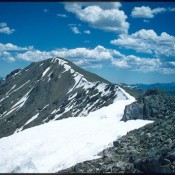
SELKIRK MOUNTAINS

The Selkirk Mountains are discussed on Pages 35-49 of the book. Updated August 2025 The Selkirk Mountains begin on Mica Peak (west of Coeur d’Alene, Idaho) and extend north, paralleling the Idaho/Washington border for more than 100 miles, into Canada. This mountain range, which is up to 30 miles wide, surrounds the Priest Lake Basin. The Selkirk peaks are formed … Continue reading

SAINT JOE MOUNTAINS

The Saint Joe Mountains are discussed on Pages 56-58 of the book. The Saint Joe Mountains form a high ridge line that runs 45 miles east-to-west between the Saint Joe and Coeur d’Alene Rivers. The range reaches its highest and most rugged heights northeast of Saint Maries, on a ridge anchored by Reeds Baldy and Latour Peak, the latter mountain … Continue reading

PURCELL MOUNTAINS

Nearing the summit of Queen Mountain. Victor Zhou Photo

The Purcell Mountains are discussed on Pages 49-51 of the book. The Purcell Mountains are primarily a Canadian range which extends south across the border into Idaho and Montana. The Idaho portion of the range is situated northeast of Bonners Ferry. The highest point in the Idaho section of the Purcells is Reno Mountain (6,779 feet) which sits on the … Continue reading

CABINET MOUNTAINS

The Cabinet Mountains are discussed on Pages 51-55 of the book. The Cabinet Mountains share many similarities with the Purcell and Selkirk Mountains. The range’s foundation is Precambrian Belt Supergroup rocks, which were carved and shaped by Pleistocene glaciation. Many peaks are high dome-shaped mountains, while a few like Scotchman Peak are sharp, sheer-edged summits reminiscent of the North Cascades. … Continue reading

Harrison Peak

Climbing and access information for this peak is on Pages 38-39 of the book. The following route description and photos are from the late Michael Darcy of CDA. Check out the Inland NW Routes link, Chic Burge’s website for the most up to date information on this peak. Chic provided some spectacular photos of this rugged summit to this page. … Continue reading

Shorty Peak

Shorty Peak is not in the book. Updated August 2025 Shorty Peak is capped by a classic fire lookout which is reached via a 2.5-mile hike. The summit is actually the lower summit of Lone Tree Peak (6,771 feet). The Forest Service rents the lookout to the public on a “first come, first serve basis.” USGS Shorty Peak Use the … Continue reading